Your cart is empty
Tax included and shipping calculated at checkout
Drawer menu
Tax included and shipping calculated at checkout


I often find my best jewellery ideas outside the studio.
A walk through the Devon countryside can become a design session without me realising it. I notice the delicate veins of a sage leaf. The uneven edge of a wildflower. A seed head bending in the wind. The rich, crinkled surface of an autumn leaf beneath my boots.
These small details stay with me.
Later, they may appear in silver as a ring, charm or pair of earrings. Not as a perfect copy. Not as something mass-produced. Instead, as a tactile, one-of-a-kind piece that carries the character of the botanical that inspired it.
The Elmes Botanicals collection is rooted in this relationship between landscape, season and making. Every piece begins with observation. Then comes the pressed-leaf process, the warmth of the flame and many hours of hand finishing.
Spring in Devon feels full of movement.
The hedgerows begin to soften. New leaves appear. Wildflowers bring small points of colour to the lanes and meadows. Primroses, daisies and other delicate blooms seem to appear overnight, tucked into banks and grassy verges.
I love the quiet optimism of this season.
Spring botanicals often inspire lighter shapes and open textures. A flower might become a small silver detail. A leaf might form the basis of a wrap ring. Fine veins can create a pattern that feels delicate but still grounded.
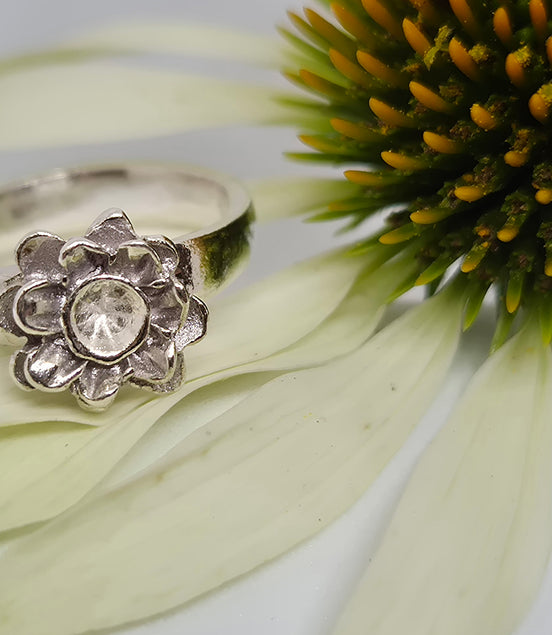
The Wild Daisy silver ring carries some of that feeling. Its floral form is simple and familiar, but the handmade finish gives it a little more personality. It is not trying to look perfectly uniform. The beauty is in the natural shape and the details that catch the light.
When I am looking for seasonal inspiration, I also like using resources such as the Devon Wildlife Trust wildflower guide. It is a reminder that the most interesting forms are often the ones growing quietly around us.
By summer, the Devon landscape feels abundant.
The hedges are fuller. Grasses move across the fields. Wildflowers stand tall in the sunshine. This is when I often notice the plants I use most directly in my work, including sage and other leaves with strong, recognisable veins.
Sage has always appealed to me because of its shape and symbolism. It suggests wisdom, protection and a connection to the earth. Its soft, organic form translates beautifully into silver.
The Sage Entwined ring is one example. Its leaf-like forms wrap and curve across the finger, creating a sculptural shape that feels connected to the botanical world. It is a statement piece, but the organic lines keep it comfortable and easy to wear.
I do not want botanical jewellery to feel stiff or overly formal. Plants are not made from straight lines. Their edges bend. Their surfaces change. Their growth is often slightly uneven.
That is what I try to preserve.
Every botanical impression begins with a real botanical.
I choose a leaf or flower for its shape, texture and strength of detail. Where possible, I work with garden-grown pieces, naturally fallen materials or responsibly gathered botanicals. I never want the making process to harm the landscape that inspires it.
I then work with silver clay. In its raw state, it is soft and workable. I can roll it, shape it and press the fresh botanical directly into the surface. The plant leaves behind its natural impression : a record of its veins, edges and small irregularities.
That direct impression is part of the charm.
The real plant does not become the finished jewellery. Its impression does.
Once I have captured the detail, I refine the edges and check the texture. I smooth areas that need to sit comfortably against the skin, while keeping the raw botanical character visible. Then I dry the clay so it is ready for firing.
Then comes the transformation.
The silver clay is fired, allowing the organic binder to burn away while the recycled silver particles fuse together. What began as soft grey clay becomes solid fine silver. I then brush, polish and finish the piece by hand.
Sometimes I bring out the raised areas with a brighter polish. Sometimes I leave darker colour in the recessed veins to create depth. The finish depends on the design and the story I want the texture to tell.
A real leaf is never identical to another.
Even leaves from the same plant can vary in size, shape and vein pattern. One may have a slightly curled edge. Another may carry a tiny mark from the weather. A flower may press more clearly on one side than the other.
These differences appear in the silver.
That is why a botanical ring or charm may not look exactly like the photograph online. The proportions may vary slightly. The texture may be deeper in one area. The edge may have a gentle asymmetry.
These are not flaws.
They are beautiful imperfections : evidence that the piece was shaped from a real botanical and finished by hand. They are what make the design one-of-a-kind.

Autumn brings a different kind of beauty to Devon.
The landscape becomes softer and more textured. Green gives way to muted gold, russet, ochre and brown. Leaves curl at the edges. Seed heads become more visible. The countryside feels quieter, but there is still plenty to notice.
I am drawn to the structure of autumn leaves. Their silhouettes are stronger. Their surfaces are more weathered. Their veins become a map of the season.
This can lead to broader ring forms, deeper textures and more sculptural pieces. An autumn-inspired design may feel less delicate than a spring wildflower. It may have a rougher surface or a darker patina that echoes wet bark, moss and woodland soil.
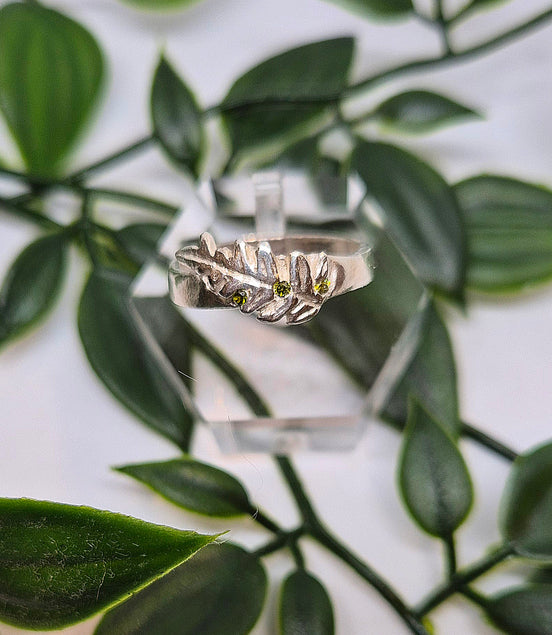
The A Fresh Breeze of Nature fern leaf ring takes inspiration from another seasonal favourite. Ferns have such a beautiful, repeating structure. Their fine fronds create movement across the silver, while the organic shape keeps the design feeling natural.
When I look at the changing countryside, I am reminded that jewellery does not need to be bright or heavily decorated to make an impact. A muted silver surface, a deep leaf impression and one carefully chosen detail can be enough.
For more seasonal inspiration, Visit Devon’s guide to the seasons offers a lovely reminder of how much the landscape changes throughout the year.
Winter gives me space to slow down.
The countryside is stripped back. Bare branches reveal their shapes. Seed heads stand against the sky. Wet stones, fallen leaves and muted grasses create a more understated palette.
This is often when I revisit ideas from the warmer months.
I might sketch a leaf I photographed in spring. Rework the shape of a summer flower. Combine several botanical details into a new ring or charm. The final design may not belong to one season alone. It may hold the whole cycle of growth, change and renewal.
This is also when I think carefully about how a piece will be worn. Is the texture comfortable? Does the ring sit securely? Is the form strong enough for everyday life? Does the silver retain the organic quality that made me notice the plant in the first place?
Handmade jewellery needs both freedom and discipline. I want the final piece to feel natural, but it must also be durable, wearable and carefully finished.
The Devon countryside is not just a backdrop to my work. It is part of the design language.
It reminds me to look closely. To value raw textures. To notice the beauty in things that are slightly uneven, weathered or easily overlooked.
That is why I work on a small scale and use recycled silver where possible. I want the making process to be thoughtful as well as beautiful. Small-scale production allows me to spend time with each piece, from the first botanical impression to the final polish.
If you are drawn to jewellery with a sense of place, explore the Botanicals collection or browse the wider rings collection.
If you have a particular leaf, flower or memory in mind, I would love to hear about it. I love collaborating with customers and helping bring a personal idea to life through bespoke jewellery design.
A botanical piece can mark a moment in time.
It might remind you of a favourite walk, a childhood garden or a season of change. It could celebrate new growth, lasting strength or the quiet beauty of everyday life.
Every Elmes Jewellery order arrives gift-ready. UK orders typically ship within 3–5 business days, while bespoke pieces usually take around 2–4 weeks from design approval to shipping. Unworn items in their original packaging can be returned within 14 days of delivery. Custom orders are non-refundable unless faulty : you can find the full details in the Elmes Jewellery FAQ.
Ready to find your piece?
Explore Now and discover jewellery inspired by real botanicals, changing seasons and the Devon landscape.
For 10% off your first order, Use Code WELCOME10.
A leaf may only last for one season. In silver, its story can stay with you for years.


